Building intelligent assistants that actually understand your internal business operations
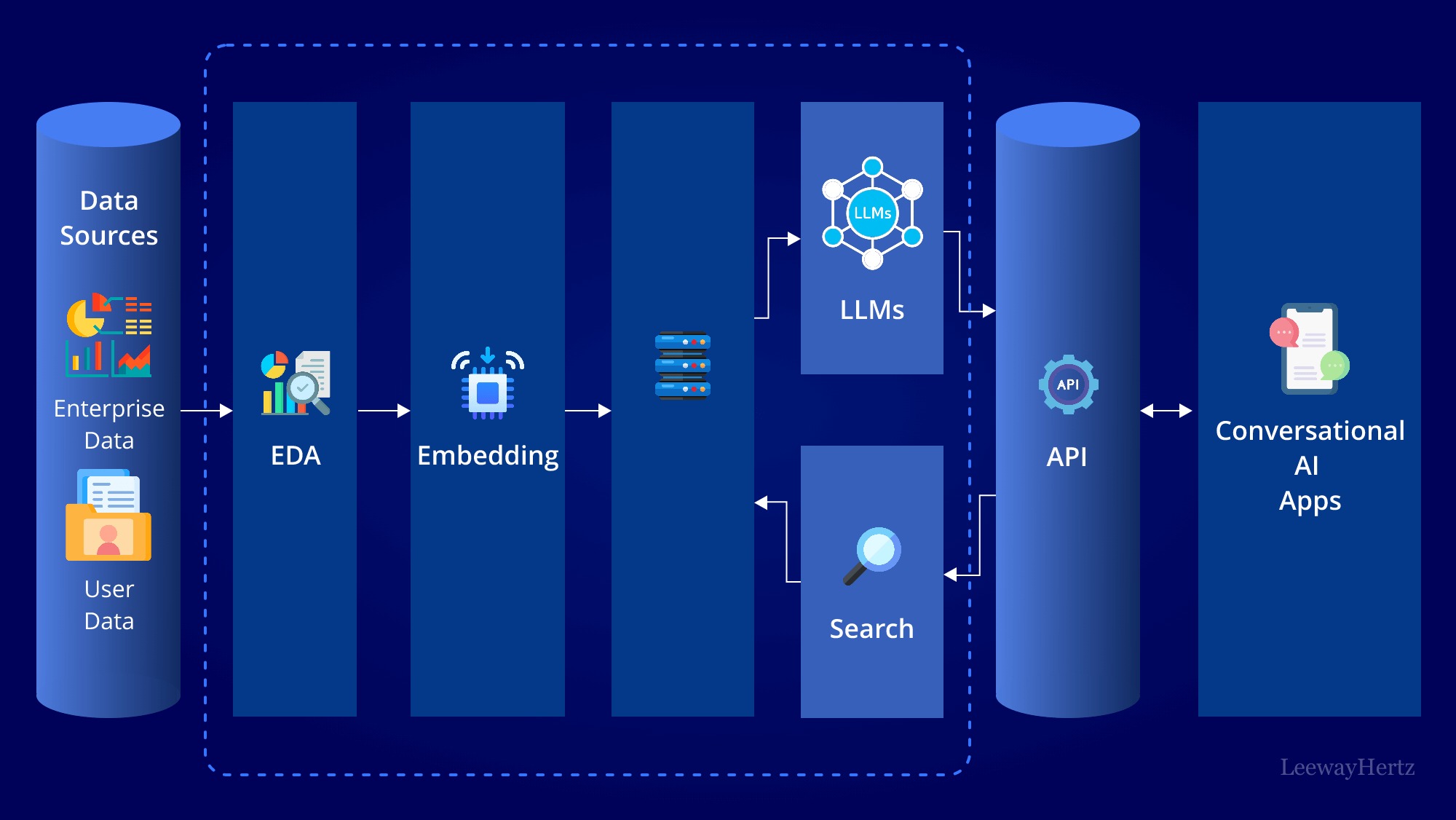
Modern companies generate massive amounts of internal data that often gets trapped in disconnected software platforms. Employees waste countless hours searching for specific documents or manually updating records across multiple disjointed systems. Investing in custom chatbot development for enterprise workflows allows organizations to bridge these operational gaps using secure artificial intelligence. This strategic move transforms passive databases into interactive assistants that actively drive daily productivity.
Off the shelf conversational tools simply cannot handle the complexity of proprietary corporate environments. They lack the necessary security protocols to process sensitive financial records or private customer information safely.
A truly effective internal assistant must understand the unique vocabulary and operational logic of your specific industry.
Connecting legacy systems seamlessly
Most organizations rely on a complex web of legacy software that was never designed to communicate with modern artificial intelligence. Building a conversational interface requires robust application programming interfaces that can fetch real time data from your existing enterprise resource planning tools.
The underlying architecture must prioritize data retrieval without exposing sensitive information to public models. This is typically achieved through a technique called retrieval augmented generation which keeps your proprietary data safely inside your own private servers.
When an employee asks the assistant for a quarterly sales report the system queries your internal database directly. It then summarizes the findings in natural language without ever sending the raw financial numbers to an external cloud provider.
This approach completely eliminates the risk of corporate data leakage while providing instant answers to complex operational queries.
Decision makers often worry about the technical debt involved in connecting these older systems to new conversational platforms. The reality is that modern middleware solutions can bridge these gaps without requiring a complete overhaul of your current infrastructure.
Designing natural user interactions
A common mistake companies make is forcing their employees to learn rigid command structures just to interact with a new internal tool. The entire purpose of deploying an intelligent assistant is to remove friction from daily tasks.
Employees should be able to type or speak exactly as they would when messaging a human colleague. The system must be trained on internal company jargon and specific operational abbreviations to truly understand the context of the request.
Training the model on historical support tickets ensures the assistant understands how your team actually communicates. This fine tuning process dramatically reduces the frustration users feel when a bot fails to comprehend their specific business needs.
Furthermore the interface should proactively suggest next steps rather than just providing a static answer. If an employee asks about a delayed shipment the assistant should immediately offer to draft an apology email to the client.
Managing security and compliance requirements
Regulatory frameworks impose strict limitations on how corporate data can be processed and stored by automated systems. Any conversational tool deployed within a highly regulated industry must feature granular access controls that mirror your existing corporate hierarchy.
A junior marketing associate should never be able to prompt the assistant to reveal the payroll details of the executive team. Role based access control ensures the artificial intelligence only retrieves and generates information that the specific user is already authorized to see.
Audit logging is another non negotiable requirement for enterprise grade deployments. Every single interaction must be recorded securely so that compliance officers can review exactly what information was requested and how the system responded.
Automated compliance checks prevent the assistant from accidentally generating responses that violate industry regulations. This safety net is crucial when deploying these tools in healthcare or financial services where a single incorrect statement can result in massive legal penalties.
Data retention policies must also be strictly enforced within the conversational platform. Conversations containing sensitive personal information should be automatically purged from the system memory after a predetermined period to minimize long term liability.
Measuring operational return on investment
Executives need concrete metrics to justify the ongoing costs of maintaining an intelligent internal assistant. Simply tracking the number of daily active users does not provide a clear picture of actual business value.
You must measure the exact amount of time saved on repetitive administrative tasks across different departments. If the human resources team saves twenty hours a week by automating employee onboarding questions that translates directly into recovered salary costs.
Tracking the resolution rate of internal support tickets is another excellent way to quantify success. When the assistant successfully guides an employee through a password reset without involving a human technician you have achieved a measurable reduction in operational overhead.
Continuous feedback loops allow the system to learn from its mistakes and improve its accuracy over time. Users should have a simple mechanism to flag incorrect responses so that engineers can refine the underlying retrieval algorithms.
Scaling across multiple global departments
What works perfectly for a small sales team in one region might completely fail when deployed to a multinational logistics department. Scaling an internal assistant requires a modular architecture that allows different business units to plug in their own specialized knowledge bases.
A centralized governance team should oversee the core security and infrastructure while allowing individual departments to customize their specific conversational flows. This decentralized approach encourages rapid adoption because the tool feels tailor made for each unique team.
Multilingual capabilities are absolutely essential for global organizations operating across diverse cultural boundaries. The underlying language models must be capable of understanding regional dialects and translating complex technical jargon accurately in real time.
Change management becomes the primary challenge when rolling out these advanced tools to thousands of employees simultaneously. Leadership must actively champion the technology and demonstrate how it empowers workers rather than threatening their job security.
Providing comprehensive training sessions helps alleviate the natural anxiety that accompanies the introduction of automated workflows. When employees understand that the assistant is there to handle the mundane data entry they become much more receptive to adopting the new technology.
Maintaining long term system reliability
Software environments constantly evolve as companies update their internal tools and restructure their databases. An intelligent assistant must be continuously monitored to ensure its integrations remain functional after these routine corporate updates.
Automated testing pipelines should run daily to verify that the conversational platform can still access all necessary data sources. Catching a broken database connection early prevents widespread operational disruptions during critical business hours.
Model degradation is a subtle issue that occurs when the underlying business processes change but the artificial intelligence is not retrained. Regular evaluations by human experts ensure the assistant remains aligned with current corporate strategies and terminology.
Budgeting for ongoing maintenance is just as important as funding the initial development phase. Organizations that treat these tools as static projects rather than living products inevitably see their adoption rates plummet over time.
Ultimately the goal is to create a digital workforce that scales effortlessly alongside your growing business ambitions. By thoughtfully integrating these conversational tools you free your human talent to focus on creative problem solving and strategic innovation.
Handling complex multi step workflows
Simple question and answer capabilities only scratch the surface of what modern artificial intelligence can achieve for a business. True operational efficiency comes from empowering the assistant to execute complex sequences of actions across multiple software platforms.
Imagine a supply chain manager asking the system to identify delayed shipments and automatically notify the affected vendors. The assistant must securely log into the inventory database draft the appropriate emails and update the project management tracker without any human intervention.
Orchestrating these multi step actions requires strict error handling protocols to prevent unintended consequences in live environments. If a vendor notification fails to send the system must immediately alert a human supervisor rather than silently dropping the task.
Building these autonomous workflows demands a deep understanding of your existing business logic and approval hierarchies. Certain actions like approving a massive financial discount must always require a final human click to ensure accountability.
This hybrid approach combines the speed of automated execution with the nuanced judgment of experienced professionals. It creates a highly resilient operational model that can handle massive volumes of routine tasks while maintaining strict quality control.